Service Details
Urea Breath Test (H. Pylori) - Urea Breath Test (UBT)
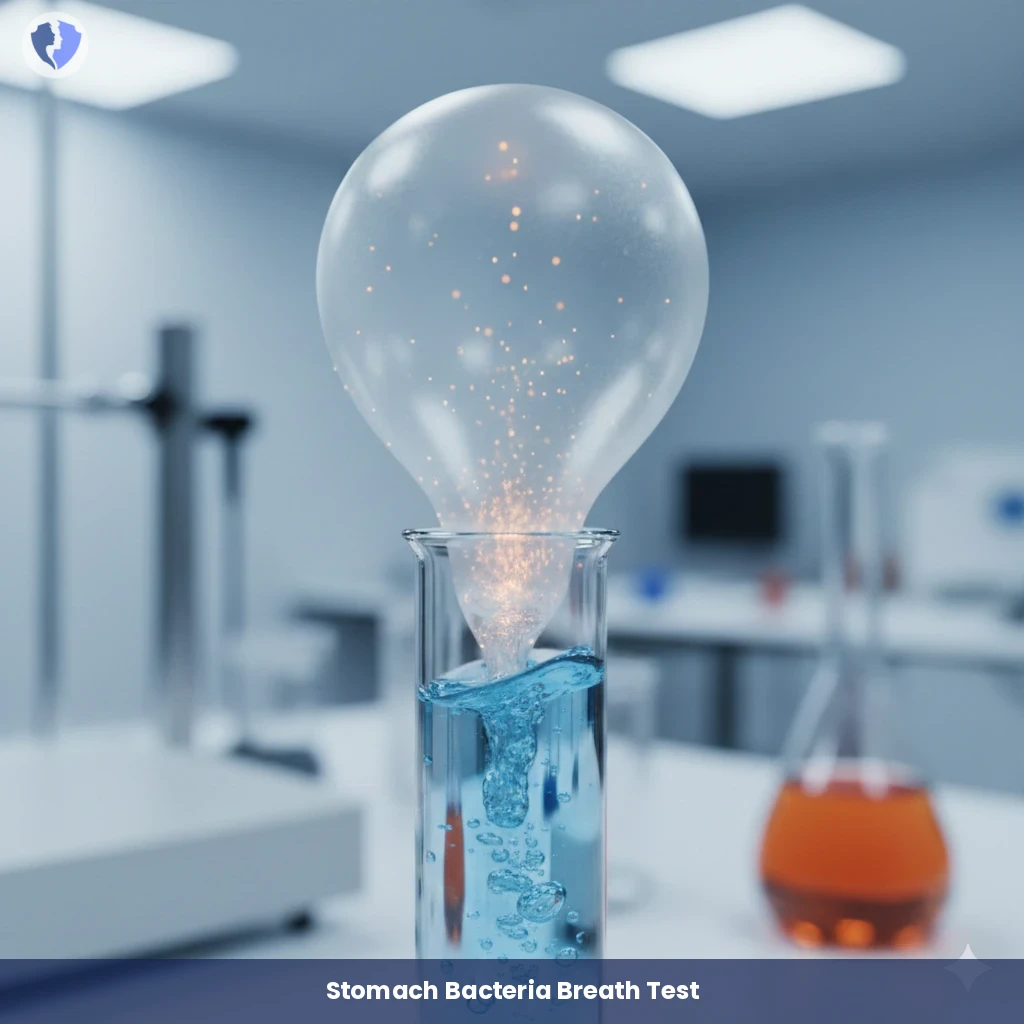
This non-invasive test is used to detect the presence of active Helicobacter pylori (H. pylori) bacteria in the gastric mucosa. It relies on the bacteria's ability to produce the enzyme urease, which breaks down urea into ammonia and carbon dioxide (CO₂). The patient drinks a solution containing urea labeled with either a non-radioactive (C¹³) or weakly radioactive (C¹⁴) carbon atom. If the bacteria are present, the solution decomposes, producing labeled carbon dioxide, which is absorbed into the bloodstream and expelled through the lungs in exhaled air, where it is measured and analyzed.