Medical notice: this content is for health education and does not provide an individual diagnosis or replace appropriate medical consultation.
Introduction to Thread Lift Technology
A thread lift is a minimally invasive cosmetic procedure designed to lift and tighten sagging facial tissues without the need for traditional surgery. Offering a bridge between non-invasive treatments and major surgical facelifts, this procedure has gained immense popularity due to its immediate results, minimal downtime, and high safety profile when performed by qualified specialists.
How Do Face Lifting Threads Work?
The mechanism of a thread lift relies on a dual-action approach to facial rejuvenation:
- Immediate Mechanical Lifting: The threads feature microscopic barbs, cones, or cogs that anchor into the subcutaneous fat layer. Once inserted, the physician gently pulls and secures the threads, lifting the sagging skin to a more youthful position.
- Biological Collagen Stimulation: The presence of the threads triggers the body's natural healing response. This localized reaction stimulates fibroblasts to produce new collagen and elastin fibers around the threads, improving skin texture and firmness even after the threads dissolve.
Types of Threads Used in Aesthetic Medicine
Different materials are utilized to cater to individual skin conditions and aesthetic goals:
1. Polydioxanone (PDO) Threads
The most widely used threads, PDO threads dissolve within 6 to 8 months. They are highly effective for structural lifting and come in various forms, including mono (smooth), screw (volumizing), and cog (barbed for lifting).
2. Poly-L-Lactic Acid (PLLA) Threads
PLLA threads are known for their superior ability to stimulate collagen production over a longer period. They dissolve slowly and provide a gradual, natural-looking volume restoration and skin rejuvenation.
3. Polycaprolactone (PCL) Threads
PCL represents the latest generation of aesthetic threads. Highly flexible and durable, they remain in the tissue for up to two years, offering long-lasting structural support and continuous collagen synthesis.
Ideal Candidates for a Thread Lift
A thread lift is not suitable for everyone. It works best for individuals who meet the following criteria:
- People in their late 30s to mid-50s experiencing mild to moderate skin laxity in the cheeks, jowls, or neck.
- Patients looking to maintain or touch up results from a previous surgical facelift.
- Individuals who prefer to avoid surgery or have medical contraindications to general anesthesia.
- Those with good skin quality, adequate skin thickness, and realistic expectations.
Who Should Avoid Thread Lifts? (Contraindications)
A thorough medical assessment is essential, as the procedure is contraindicated for:
- Severe skin sagging or excess skin that requires surgical excision.
- Extremely thin or fragile skin, which may allow the threads to become visible.
- Active skin infections, severe acne, or inflammation in the treatment area.
- Patients with bleeding disorders or those on active anticoagulant therapy.
- Pregnant or breastfeeding women.
The Procedure: What to Expect at the Clinic
Performed as an outpatient procedure under local anesthesia, a thread lift typically takes 45 to 60 minutes:
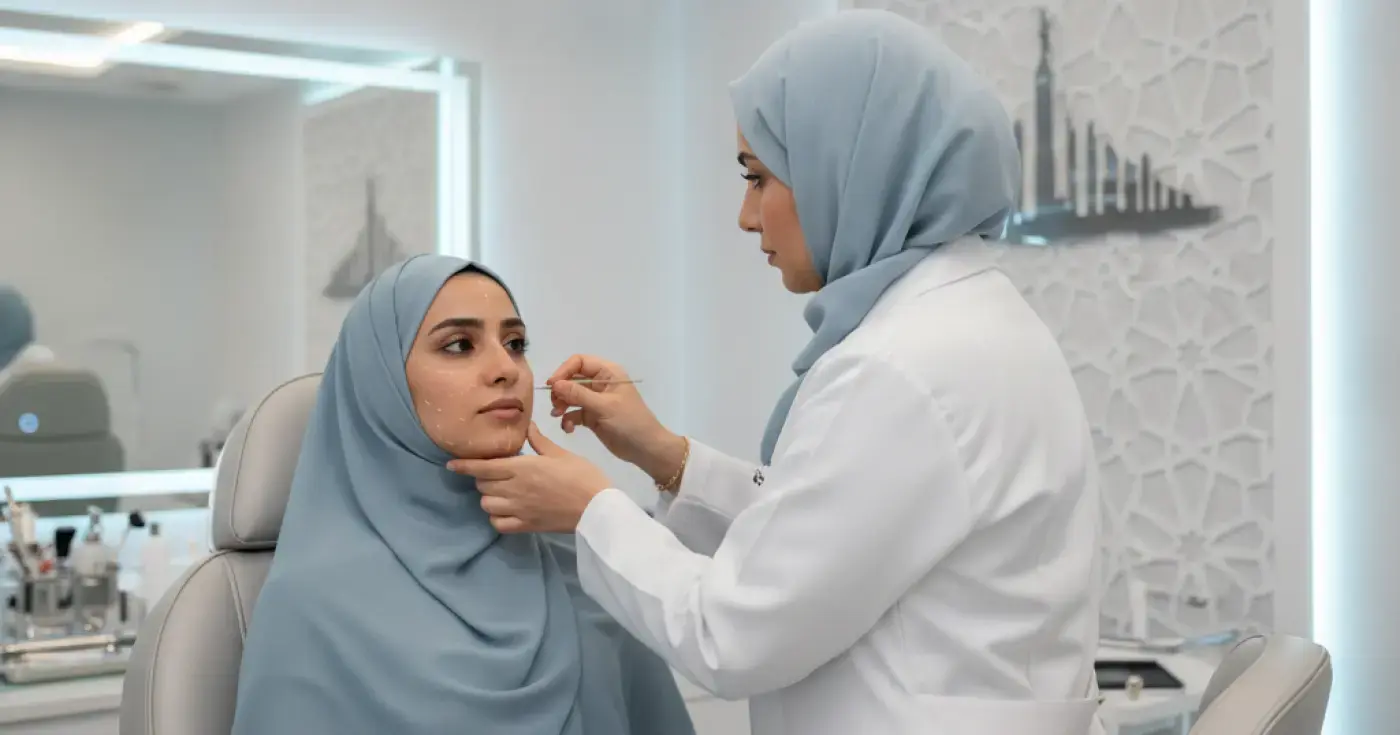
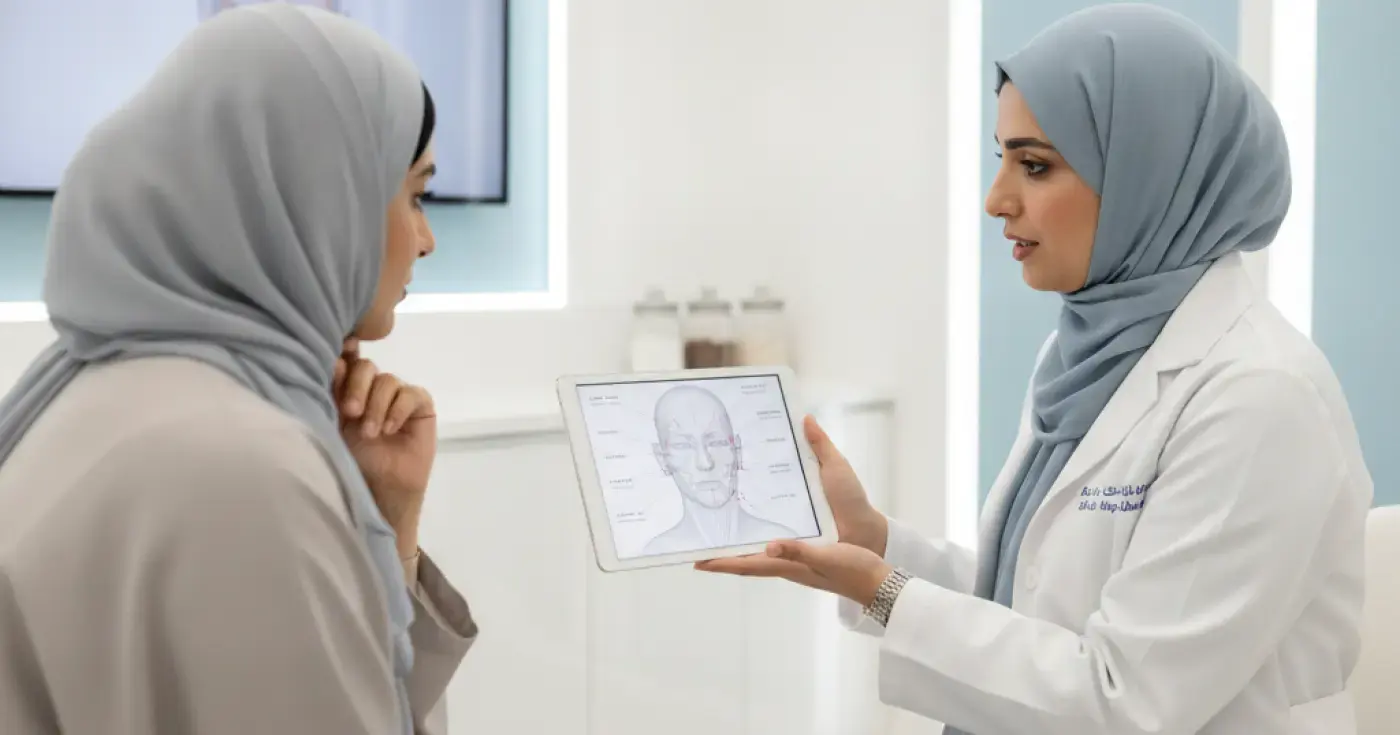
- Mapping and Planning: The doctor cleans the face and marks the insertion and exit points based on facial anatomy and lifting goals.
- Local Anesthesia: Local anesthetic is injected at the entry and exit points to ensure patient comfort throughout the procedure.
- Thread Insertion: Using a fine needle or a blunt cannula, the physician inserts the threads into the subcutaneous fat layer.
- Securing and Trimming: The threads are tensioned to achieve the desired lift, and the excess ends are trimmed, leaving the threads completely hidden beneath the skin.
Comparison: Thread Lift vs. Surgical Facelift
| Feature | Thread Lift | Surgical Facelift |
|---|
| Anesthesia | Local anesthesia | General anesthesia or deep sedation |
| Procedure Time | 45 - 60 minutes | 3 - 5 hours |
| Recovery Time | 2 - 5 days | 2 - 4 weeks |
| Result Longevity | 1 - 2 years | 10 - 15 years |
| Risks & Side Effects | Low and temporary | Moderate (bleeding, scarring, nerve injury) |
| Cost | Low to moderate | High to very high |
Expected Results and Longevity
While some lifting effect is visible immediately after the procedure, the most natural and optimal results appear gradually over 2 to 3 months as new collagen forms. The results of a thread lift generally last between 12 and 18 months. Longevity depends on the type of threads used, individual skin characteristics, age, and adherence to proper post-treatment skin care.
Potential Side Effects and Complications
Although highly safe, some temporary side effects may occur post-procedure:
- Swelling and Bruising: Common and mild, typically resolving within a few days. Cold compresses can help manage this.
- Mild Tightness or Discomfort: A sensation of tightness is normal and subsides within the first week.
- Asymmetry: Often temporary due to uneven swelling, resolving as the tissues settle.
- Rare Risks: Infection, thread migration, or thread protrusion, which require prompt medical evaluation.
Essential Post-Procedure Care and Instructions
Following post-care guidelines is crucial to achieving the best results and preventing complications:
- Avoid rubbing or massaging the face vigorously for at least 3 weeks.
- Sleep on your back with your head elevated on extra pillows for the first few days.
- Avoid opening your mouth excessively wide (such as wide yawning or dental work) for 2 weeks.
- Refrain from strenuous exercise, swimming, and high heat (saunas) for 2 weeks.
- Avoid harsh skincare products or chemical peels for at least 1 week.
When to Contact Your Doctor Immediately
Patients should contact their clinic immediately if they experience:
- Severe, worsening pain that does not respond to prescribed pain relievers.
- Signs of infection, such as severe redness, warmth, or discharge at the insertion points.
- Visible thread protrusion or a sharp, poking sensation under the skin.
- Significant, persistent facial asymmetry after 2 weeks.