
Lahalak Medical PlatformDifferentiate Care
Discover how laser lip lightening works, what to expect during the session, results, recovery tips, and potential side effects in this medical guide.
Advertisement
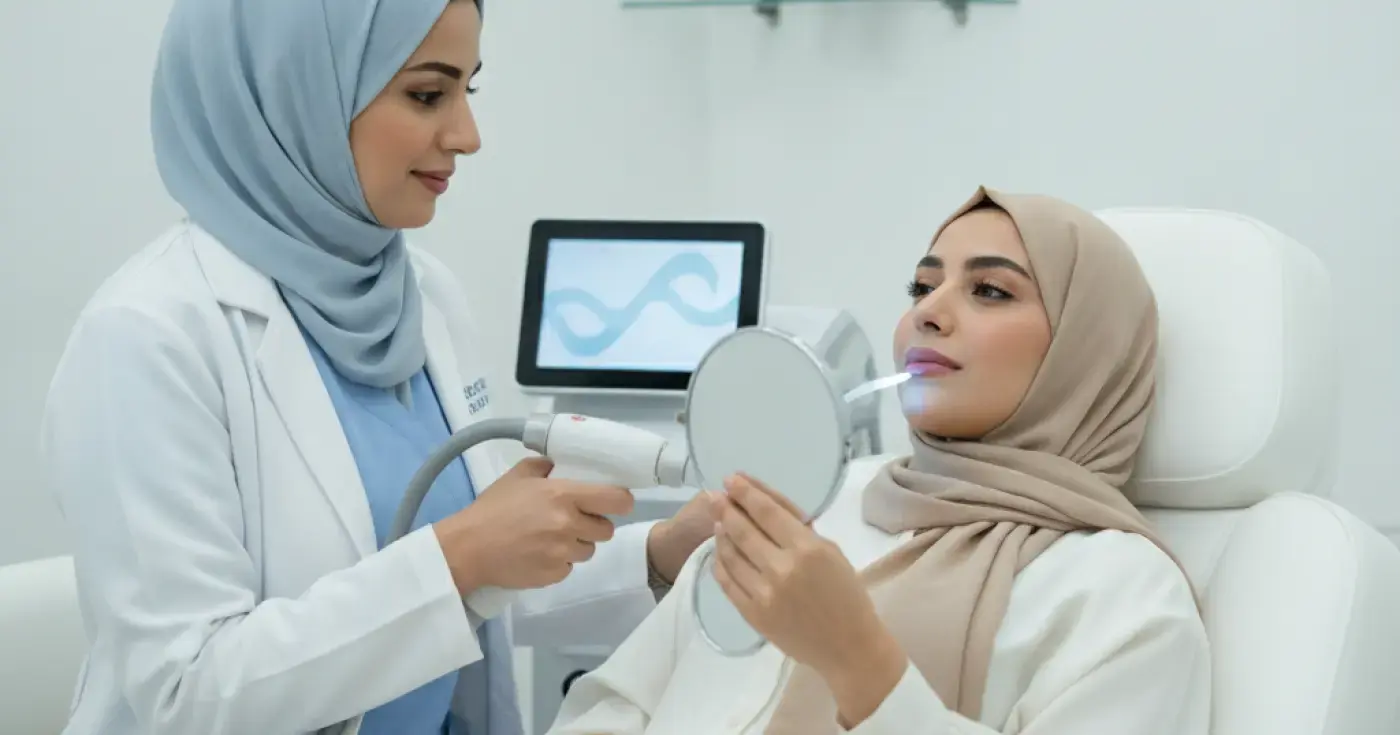
Dark or hyperpigmented lips can be a cosmetic and personal concern for many individuals. This pigmentation occurs due to an overproduction of melanin in the delicate tissues of the lips. Laser lip lightening (also known as laser lip depigmentation) is an advanced, non-invasive cosmetic medical procedure designed to restore the natural, healthy pink tone of the lips by precisely targeting excess pigment cells without damaging the surrounding tissues.
This technique utilizes specialized lasers, most commonly Q-Switched Nd:YAG or Picosecond lasers. The laser emits ultra-short, rapid pulses of light energy that penetrate the superficial layers of the lip skin. The melanin (pigment) absorbs this energy, causing it to break down into microscopic particles. The body's lymphatic system then naturally and gradually clears these particles away. Additionally, the gentle heat generated by the laser stimulates collagen production, giving the lips a smoother, more youthful appearance.
Laser lip depigmentation is highly suitable for individuals experiencing:
However, this procedure may not be suitable for pregnant or breastfeeding women, individuals with active herpes simplex virus (cold sores) on the lips, or those with a history of keloid scarring.
The procedure is performed in a specialized Cosmetic Dermatology clinic by a qualified physician and involves the following steps:
The doctor evaluates the lips, determines the depth of pigmentation, and reviews the patient's medical history to rule out any contraindications. Patients are advised to avoid direct sun exposure and harsh lip scrubs for at least a week before the session.
Because the lips are highly sensitive, a strong topical numbing cream is applied to the area for 20 to 30 minutes. This ensures maximum comfort and minimizes any pinching or tingling sensations during the laser application.
After thoroughly removing the numbing cream, the patient is provided with protective eyewear. The physician then precisely directs the laser pulses over the pigmented areas of the lips. The entire process typically takes only 10 to 15 minutes.
Cold compresses or ice packs wrapped in a clean cloth are applied to reduce immediate swelling and redness. A sterile, fragrance-free medical moisturizer, such as medical-grade petrolatum or healing ointments, is then applied to protect the skin barrier.
The following table outlines the key differences between laser treatment and other common lip lightening methods:
| Feature | Laser Lip Lightening | Chemical Lip Peels | Lip Blushing (Tattooing) |
|---|---|---|---|
| Mechanism | Breaks down pigment with laser energy and boosts collagen | Exfoliates the outer layer using mild acids | Deposits color pigments under the skin to mask darkness |
| Expected Results | Natural, gradual lightening of the lip's original tone | Mild, temporary lightening requiring frequent repetition | Immediate pink color coverage, which may sometimes look unnatural |
| Recovery Time | 3 to 7 days (mild peeling and temporary swelling) | 2 to 5 days (dryness and flaking) | 7 to 14 days (heavy peeling and intensive care) |
| Potential Side Effects | Temporary swelling, redness, or rare rebound hyperpigmentation | Irritation, superficial burns if not carefully applied | Color changes over time, allergic reactions, or infection risk |
The final results of a laser session are not visible immediately. In the first few days, the lips may appear darker, and a thin, dark crust may form. This is a completely normal part of the healing and cell renewal process. Within a week, the lips will gently peel to reveal a softer, healthier pink layer underneath.
Most patients require a series of 2 to 4 sessions, spaced 4 to 6 weeks apart, depending on the depth of the pigmentation and individual skin response.
While laser lip lightening is highly safe when performed by a qualified professional, temporary side effects can occur, including:
The longevity and quality of your results depend heavily on your skincare routine post-procedure. Key recommendations include:
Contact your clinic immediately if you experience severe, persistent pain that does not respond to over-the-counter pain relievers, blistering or painful sores suggestive of a herpes outbreak, excessive swelling lasting more than three days, or signs of bacterial infection such as yellow discharge or fever.
Clear, direct answers
Advertisement
Continue exploring
Learn the clinical differences between lip, cheek, and chin fillers. Compare density, injection techniques, and safety tips for optimal results.
Read article
Discover how long facial fillers last based on type and treatment area. Learn about factors affecting longevity and expert tips to maintain your results.
Read article
Learn about normal symptoms after dermal fillers, the recovery timeline, and expert aftercare tips to ensure safe, optimal cosmetic results.
Read article