Insight Hub

Your feedback helps us raise our care standards.

LahaLak logo
LahaLakHealth Nexus | LahaLak Medical Services Office

We shape a clearer and more trusted care journey by combining medical expertise with digital technology.

Discovery

  • Vision & Mission
  • Elixir Blog
  • Success Stories

Ecosystem

  • Ambassador Program
  • Career Paths
  • Join as an Accredited Care Center
  • Practitioner Entry

Secure Access Node

Active Node

Support & Complaints Unit

0599489990

الخط المباشر|Direct Secure Line

Global Payments | سداد آمن
Privacy
Disclaimer
Editorial Policy & Medical Standards
Beneficiary Rights
Official IBAN
SA21 1000 0011 7000 0034 5102

All rights reserved to LahaLak Medical Platform © 2026
Exclusive Operator: LahaLak Medical Services Office

Reusing or copying platform content, designs, or ideas for commercial use is prohibited without prior written permission.

SBC: 0000209083CR: 4030402711VAT: 300095977700003SAIP: 1443017765BASE: Jeddah 23323
Lahalak Logo
Lahalak Medical PlatformDifferentiate Care
جاري تحميل مقال إكسير
Home›Elixir›Medical News›Iron and Ferritin Tests: How to Distinguish Between Iron Deficiency and Anemia
Medical News

Iron and Ferritin Tests: How to Distinguish Between Iron Deficiency and Anemia

Learn how to distinguish between iron deficiency and iron deficiency anemia using ferritin and CBC blood tests. Understand symptoms, stages, and treatments.

By: LahaLak Medical PlatformPublished: October 9, 2026Updated: October 9, 202610 min read53 views
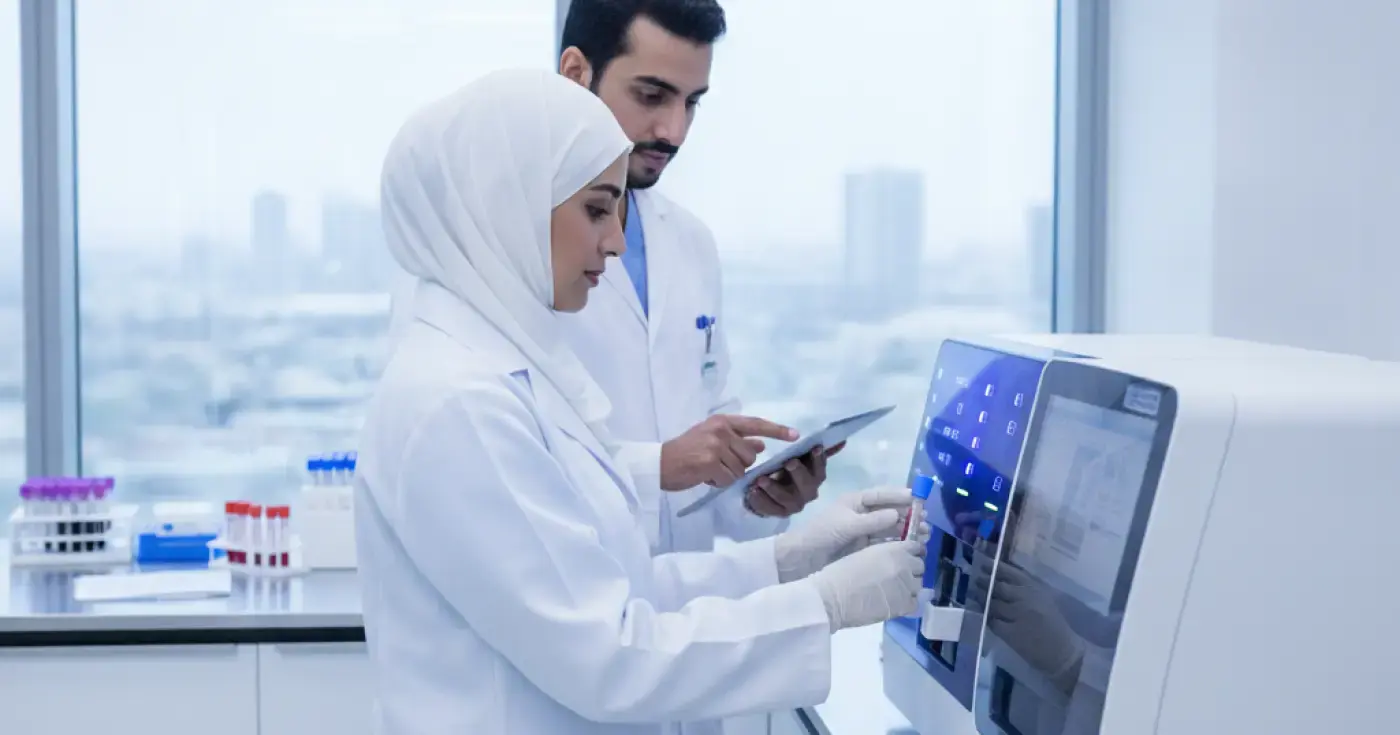
A female physician explaining iron and ferritin blood test results to a patient in a clinic
Health education content
Sources are listed
Does not replace a clinician
Publication dates are transparent

Advertisement

Medical notice: this content is for health education and does not provide an individual diagnosis or replace appropriate medical consultation.

Introduction: The Vital Role of Iron in the Body

Iron is an essential micronutrient required for numerous physiological processes that sustain human life. Its primary and most well-known role is in the synthesis of hemoglobin, the iron-rich protein in red blood cells responsible for transporting oxygen from the lungs to tissues throughout the body. Iron is also a key component of myoglobin, which stores oxygen in muscle tissue, and plays a critical role in cellular energy production, DNA synthesis, and immune function. Despite its biological importance, iron disorders are highly prevalent worldwide, including in Saudi Arabia. Clinicians frequently encounter confusion among patients regarding two distinct clinical states: iron deficiency and iron deficiency anemia. This comprehensive medical article elucidates the physiological differences between these conditions and explains how laboratory diagnostics are utilized to differentiate them.

What is Iron Deficiency?

Iron deficiency represents an early, subclinical state where the body's total iron stores are depleted below optimal physiological levels. During this initial phase, the body draws upon its backup iron reserves stored as ferritin in the liver, spleen, and bone marrow to meet daily metabolic demands. Crucially, during this stage, circulating hemoglobin levels remain within the normal reference range. This means that while the body's "storage tanks" are running low, there is still enough active iron to produce a normal volume of healthy red blood cells. This condition is often referred to as latent or non-anemic iron deficiency and is primarily diagnosed by evaluating serum ferritin levels.

What is Iron Deficiency Anemia?

Iron deficiency anemia (IDA) is the advanced, clinically manifest stage of prolonged iron depletion. When iron stores are completely exhausted, the bone marrow can no longer obtain sufficient iron to synthesize hemoglobin for new red blood cells. Consequently, erythropoiesis becomes impaired, leading to the production of microcytic (abnormally small) and hypochromic (pale) red blood cells. At this stage, total hemoglobin levels drop below the established normal threshold, significantly reducing the blood's oxygen-carrying capacity. This systemic oxygen deficit triggers the classic clinical symptoms of anemia, such as profound fatigue, exertional dyspnea, and pallor.

The Three Stages of Iron Depletion

The progression from optimal iron status to clinical anemia is a gradual process that occurs in three distinct physiological stages:

  • Stage 1: Iron Depletion: Characterized by a significant decrease in serum ferritin, indicating depleted storage iron, while serum iron and hemoglobin levels remain normal. Patients are typically asymptomatic.
  • Stage 2: Iron-Deficient Erythropoiesis: Storage iron is exhausted, serum iron decreases, and Total Iron-Binding Capacity (TIBC) increases. Red blood cell production is compromised, but hemoglobin levels remain near the lower limit of normal. Mild symptoms like fatigue may begin to emerge.
  • Stage 3: Iron Deficiency Anemia: Hemoglobin levels fall significantly below the normal range. Red blood cells appear microcytic and hypochromic under microscopic evaluation, and full clinical symptoms manifest.

Key Laboratory Tests for Assessing Iron Status

To accurately distinguish between simple iron deficiency and clinical anemia, healthcare providers utilize a comprehensive iron panel and hematological tests:

  • Serum Iron Test: Measures the concentration of iron circulating in the liquid portion of the blood (plasma) bound to transferrin. This value can fluctuate daily based on dietary intake.
  • Serum Ferritin Test: The most sensitive and specific marker for evaluating total body iron stores. A low ferritin level is diagnostic of iron deficiency.
  • Total Iron-Binding Capacity (TIBC): Measures the blood's capacity to bind iron with transferrin. In iron deficiency states, TIBC increases as the body attempts to maximize iron transport.
  • Transferrin Saturation (TSAT): Represents the percentage of transferrin that is saturated with iron. A low TSAT indicates insufficient iron supply for erythropoiesis.
  • Complete Blood Count (CBC): Evaluates hemoglobin (Hb), hematocrit (Hct), Mean Corpuscular Volume (MCV), and Mean Corpuscular Hemoglobin (MCH) to confirm the presence and morphological type of anemia.

Laboratory Comparison Table

The following table outlines the typical laboratory findings across different stages of iron status:

Laboratory ParameterNormal StatusIron Deficiency (Non-Anemic)Iron Deficiency Anemia
Hemoglobin (Hb)NormalNormalLow
Serum FerritinNormal (>30 ng/mL)Low (<30 ng/mL)Very Low (<15 ng/mL)
Serum IronNormalNormal or Mildly LowSignificantly Low
TIBCNormalElevatedSignificantly Elevated
MCV (Cell Size)NormalNormalLow (Microcytic)

Clinical Symptoms: How Do They Differ?

While non-anemic iron deficiency may present with subtle, non-specific symptoms such as mild fatigue, hair thinning, brittle nails, or impaired cognitive concentration, iron deficiency anemia presents with more pronounced clinical signs. These include severe, persistent exhaustion, pale skin and conjunctiva, shortness of breath during minimal physical exertion, dizziness, cold extremities, rapid heart rate (tachycardia), and pica (an abnormal craving for non-nutritive substances like ice, dirt, or paper).

Common Causes and Risk Factors

Understanding the underlying etiology is crucial for effective management. Common causes include:

  • Inadequate Dietary Intake: Diets low in bioavailable iron (heme iron found in red meat and poultry), often seen in poorly planned vegetarian diets.
  • Dietary Inhibitors: Consuming tea or coffee immediately after meals, as tannins and polyphenols inhibit non-heme iron absorption.
  • Chronic Blood Loss: Heavy menstrual bleeding (menorrhagia) in women of reproductive age, or gastrointestinal bleeding from ulcers, polyps, or inflammatory bowel disease.
  • Malabsorption Disorders: Conditions like Celiac disease, or anatomical alterations such as bariatric surgery (gastric bypass) that impair iron absorption in the duodenum.
  • Increased Physiological Demand: Rapid growth phases in infants and adolescents, as well as pregnancy and lactation.

Clinical Management and Treatment Strategies

Therapeutic intervention must be tailored to the severity of the deficiency and its primary cause under professional medical supervision:

1. Oral Iron Supplementation

Oral iron supplements (ferrous salts) are the standard first-line therapy for mild to moderate deficiency. They must be taken as prescribed, typically for 3 to 6 months, to fully replenish depleted stores. Absorption is enhanced when taken on an empty stomach or with Vitamin C, and should not be co-administered with calcium supplements or antacids.

2. Intravenous (IV) Iron Therapy

IV iron is indicated for patients who cannot tolerate oral iron due to severe gastrointestinal side effects, those with severe malabsorption syndromes, patients with ongoing active blood loss, or when rapid correction of anemia is clinically required (e.g., pre-operatively or during late-stage pregnancy).

3. Dietary Modifications

Patients are advised to incorporate iron-rich foods into their daily diet, prioritizing heme iron sources (red meat, liver, seafood) and pairing non-heme sources (spinach, legumes) with Vitamin C-rich foods to optimize absorption. Spacing tea and coffee consumption at least two hours away from meals is also highly recommended.

Preventive Measures and General Guidance

Preventing iron depletion involves maintaining a balanced diet and undergoing routine screening, particularly for high-risk populations such as pregnant women, adolescent girls, and individuals post-bariatric surgery. Self-diagnosis and unsupervised iron supplementation should be strictly avoided, as excess iron can accumulate in vital organs, leading to iron overload and systemic toxicity. A consultation with a primary care physician remains the safest and most effective approach to managing iron health.

Sources and References

  1. World Health Organization (2020) WHO guideline on use of ferritin concentrations to assess iron status in individuals and populations
  2. Mayo Clinic Staff (2023) Iron deficiency anemia - Symptoms and causes Mayo Clinic
  3. Ministry of Health Saudi Arabia (2022) Anemia Health Awareness MOH Portal
  4. World Health Organization
  5. MedlinePlus

Clear, direct answers

Frequently Asked Questions

Can you have iron deficiency without being anemic?+
Yes. This occurs in the early stages of iron depletion when storage iron (ferritin) is low, but circulating hemoglobin levels remain within the normal range.
What is the most accurate test for body iron stores?+
The serum ferritin test is the most sensitive and specific laboratory marker for evaluating total body iron stores.
Why does TIBC increase in iron deficiency?+
Total Iron-Binding Capacity (TIBC) increases as a physiological response to low iron levels, as the body produces more transferrin proteins to capture any available iron.
Does drinking tea after meals cause anemia?+
Tea contains tannins that bind to non-heme (plant-based) iron and inhibit its absorption. Consistently drinking tea immediately after meals can contribute to iron depletion over time.
What are the best foods to raise iron levels quickly?+
Heme iron sources, such as red meat, poultry, and fish, are absorbed most efficiently by the body. Plant-based sources like lentils and spinach should be paired with Vitamin C to enhance absorption.

Explore the topic

Related articles

  • White Blood Cell (WBC) Count: Detecting Infections and Immune DisordersElixir · Health Panorama
  • Platelet Count Test: Causes of High and Low Levels & Clinical ImplicationsElixir · Health Panorama
  • Hemoglobin Test: How It Helps Detect Anemia and Blood DisordersElixir · Health Panorama

Elixir

Explore health content

Medical News

Browse Elixir sections and continue exploring content related to this article.

Medical NewsConsumer AwarenessInspiring Stories

Advertisement

Your opinion matters

Was this content helpful?

Have a note?

Comments require login.Log in
Loading comments
Loading related articles

Continue exploring

Related Articles

White Blood Cell (WBC) Count: Detecting Infections and Immune Disorders

White Blood Cell (WBC) Count: Detecting Infections and Immune Disorders

Discover how a white blood cell (WBC) count helps detect infections and immune disorders. Learn about normal ranges, high, and low levels.

Read article

Platelet Count Test: Causes of High and Low Levels & Clinical Implications

Platelet Count Test: Causes of High and Low Levels & Clinical Implications

Learn about platelet count analysis, normal ranges, causes of high (thrombocytosis) and low (thrombocytopenia) levels, and clinical implications.

Read article
Hemoglobin Test: How It Helps Detect Anemia and Blood Disorders

Hemoglobin Test: How It Helps Detect Anemia and Blood Disorders

Learn about the hemoglobin test, normal ranges for men, women, and pregnant women, causes of low or high levels, and medical treatments.

Read article