
Lahalak Medical PlatformDifferentiate Care
Explore the clinical link between stress and dandruff. Learn how cortisol triggers scalp irritation, itching, and flakes, and find medical solutions.

Advertisement
Modern medical research has long established a powerful connection between mental well-being and physical health, a relationship clearly illustrated in the field of psychodermatology. The scalp is one of the most sensitive areas of the body, highly reactive to emotional shifts and daily pressures. Many people ask: Can psychological stress and work pressure directly cause dandruff and scalp irritation? In this article, we will explore the scientific evidence and biological mechanisms linking stress to scalp health, along with medical and practical solutions to manage this issue.
Dandruff is a common scalp condition characterized by the shedding of white or grey flakes of dead skin, often accompanied by mild to moderate itching. Medically, dandruff is linked to the activity of a yeast-like fungus called Malassezia, which lives naturally on the scalps of most adults, feeding on the natural oils (sebum) produced by sebaceous glands. When the natural balance of the scalp is disrupted, skin cell turnover accelerates, leading to an accumulation of dead cells that appear as visible flakes.
Although psychological stress does not directly produce the Malassezia fungus, it acts as a potent trigger that alters the scalp environment, making it more vulnerable to inflammation and irritation. The biological mechanisms of this impact include:
Under chronic stress, the body releases stress hormones, primarily cortisol. Elevated cortisol levels stimulate the sebaceous glands in the scalp to produce excess oils. This excess sebum provides an ideal food source for Malassezia, leading to its rapid proliferation and the release of acidic byproducts that irritate the scalp.
Chronic psychological stress weakens the skin's natural protective barrier. When this barrier is compromised on the scalp, it loses moisture easily, leading to dryness and a reduced ability to resist external microbes and chemical irritants in hair care products, resulting in redness and irritation.
Stress negatively impacts the immune system, prompting the body to release pro-inflammatory chemical compounds called cytokines. These compounds exacerbate skin inflammation and increase scalp sensitivity, accelerating skin cell shedding and triggering intense itching.
The following table outlines the key differences between simple dandruff and dandruff exacerbated by psychological stress and inflammation:
| Feature | Ordinary Dandruff | Stress-Induced Dandruff & Irritation |
|---|---|---|
| Primary Cause | Dead skin cell buildup and normal Malassezia yeast activity | Elevated cortisol, increased sebum production, and scalp inflammation |
| Associated Symptoms | Mild white or grey flakes without significant redness | Intense itching, redness, greasy yellow flakes, and persistent irritation |
| Response to OTC Shampoos | Improves quickly with standard anti-dandruff shampoos | May resist standard treatments, requiring specialized medical shampoos |
| Impact of Mental State | No direct correlation with daily mood fluctuations | Flares up noticeably during periods of high stress or anxiety |
If you are going through a stressful period and notice changes in your scalp, you may experience the following symptoms:
While mild dandruff can often be managed at home, certain situations require booking a dermatologist consultation for an accurate diagnosis and a tailored treatment plan. These include:
Managing stress-related dandruff requires a dual approach combining topical medical treatments with lifestyle modifications:
These are the first line of defense. It is best to choose shampoos containing clinically proven active ingredients such as:
For severe irritation and redness, a dermatologist may prescribe topical lotions or drops containing mild corticosteroids to quickly and temporarily reduce inflammation and itching.
Since stress is the primary trigger, managing it is an essential part of treatment. Here are some effective tips:
To protect your scalp during stressful periods, consider adopting the following scalp care routine steps:
Clear, direct answers
Advertisement
Continue exploring
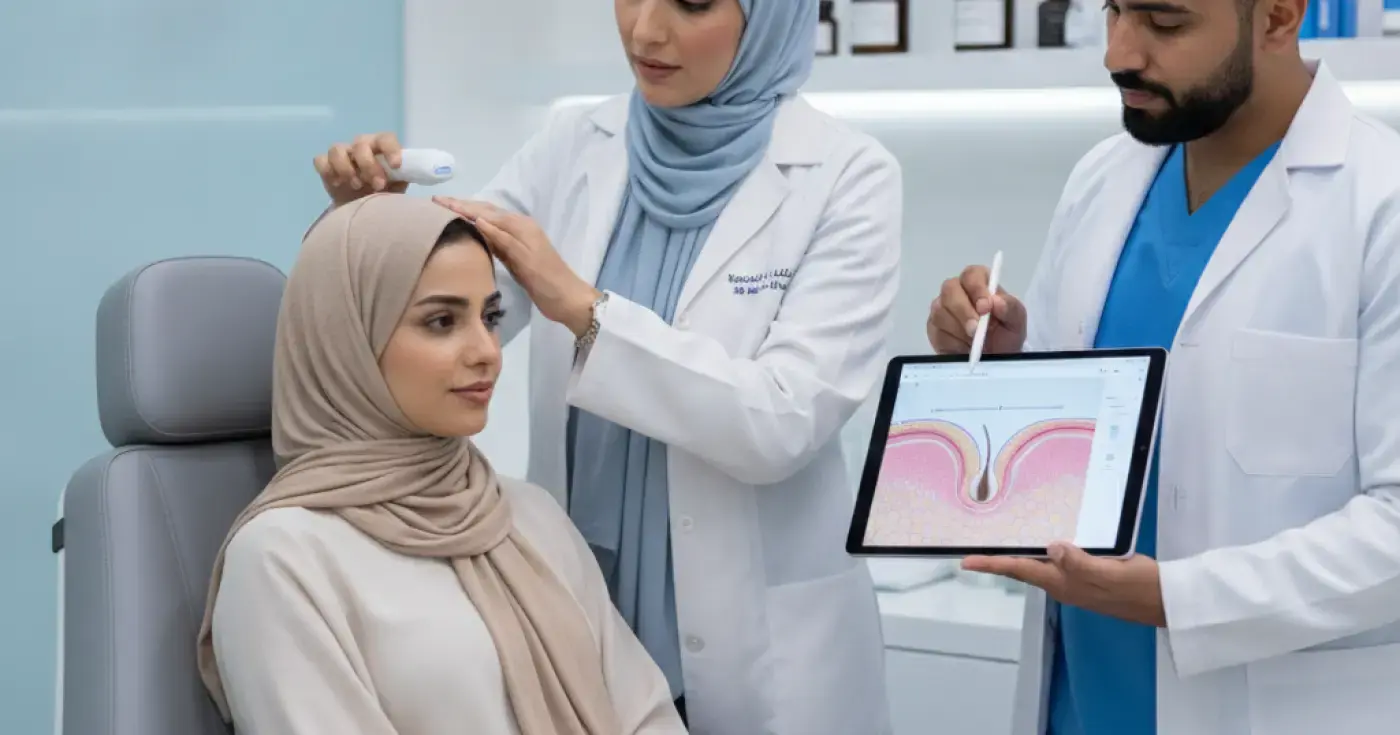
Discover the symptoms, triggers, and medical prevention methods for a sensitive scalp. Learn how to care for your scalp with expert dermatological advice.
Read article
Discover the best medicated shampoos for dandruff and scalp irritation. Learn about active ingredients, proper usage, and expert dermatological tips.
Read article
Learn about the causes of severe scalp flaking, the differences between dandruff and psoriasis, and warning signs that require a dermatologist visit.
Read article