
Lahalak Medical PlatformDifferentiate Care
Get the scientific facts about laser hair removal and cancer risk. Learn the difference between ionizing and non-ionizing radiation from medical experts.
Advertisement
Laser hair removal has become one of the most widely performed cosmetic procedures globally and within the Kingdom of Saudi Arabia. Despite its widespread acceptance, lingering anxieties and misconceptions persist, most notably the question: Does laser hair removal cause cancer?
This scientific article aims to address these concerns by presenting clear, evidence-based facts from trusted global and local health authorities, such as the Saudi Food and Drug Authority (SFDA) and the World Health Organization (WHO), helping you make informed and safe decisions about your aesthetic care.
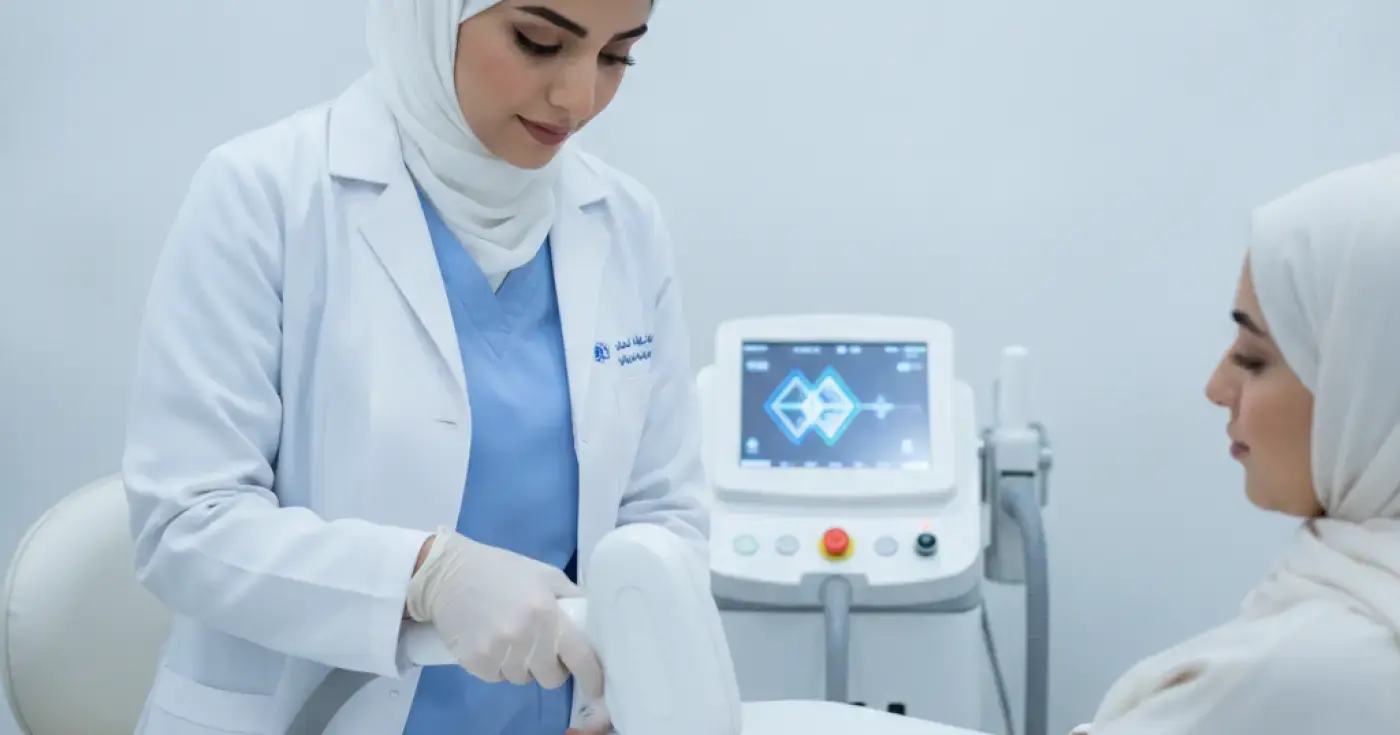
To understand why lasers do not cause cancer, it is essential to understand how the technology works. The word LASER stands for Light Amplification by Stimulated Emission of Radiation. In dermatology and cosmetics, lasers produce a highly concentrated beam of light of a single, specific wavelength.
This light targets the melanin (pigment) within the hair follicle. The follicle absorbs the light energy, converting it into heat, which damages the follicle to inhibit future hair growth. The penetration of this light is extremely shallow, reaching only the upper layers of the skin without ever impacting internal organs.
The scientific explanation for why cosmetic lasers do not cause cancer lies in the distinction between two types of radiation:
| Feature | Ionizing Radiation (e.g., X-rays) | Non-Ionizing Radiation (e.g., Cosmetic Lasers) |
|---|---|---|
| Energy Level | Very High | Low to Moderate |
| DNA Impact | Can cause direct damage and mutations | Does not damage or mutate DNA |
| Penetration Depth | Deeply penetrates tissues and organs | Extremely superficial (skin level only) |
| Cancer Association | Scientifically proven with excessive exposure | No scientific or clinical association |
Major health organizations worldwide agree on the safety of cosmetic lasers when operated by qualified professionals. The Saudi Food and Drug Authority (SFDA) strictly regulates all medical and cosmetic laser devices in Saudi Arabia, ensuring they meet rigorous safety and performance standards before clinical use.
Similarly, the U.S. Food and Drug Administration (FDA) clears laser hair removal devices as safe for public use, noting that there is no scientific evidence or clinical data linking these devices to the development of cancerous tumors.
While laser hair removal does not cause cancer, it is a medical-cosmetic procedure that can carry some temporary, minor side effects, including:
To minimize side effects and ensure optimal, safe results, consider the following recommendations:
You should contact your treating physician immediately if you experience any of the following symptoms after a session:
Several myths continue to circulate regarding laser treatments:
Clear, direct answers
Advertisement