
Lahalak Medical PlatformDifferentiate Care
Comprehensive medical guide to Dermapen microneedling. Learn how it works, its benefits for scars and wrinkles, side effects, and post-care.
Advertisement
Maintaining healthy, radiant skin is a primary aesthetic and medical goal for many individuals. With continuous advancements in cosmetic dermatology, non-surgical techniques have gained immense popularity. Among these, the Dermapen device stands out as one of the most widely performed procedures in specialized clinics across Saudi Arabia. This minimally invasive treatment relies on the body's natural healing mechanisms to rejuvenate the skin, making it a preferred choice for dermatologists and patients alike to address common concerns such as scarring, fine lines, and enlarged pores.
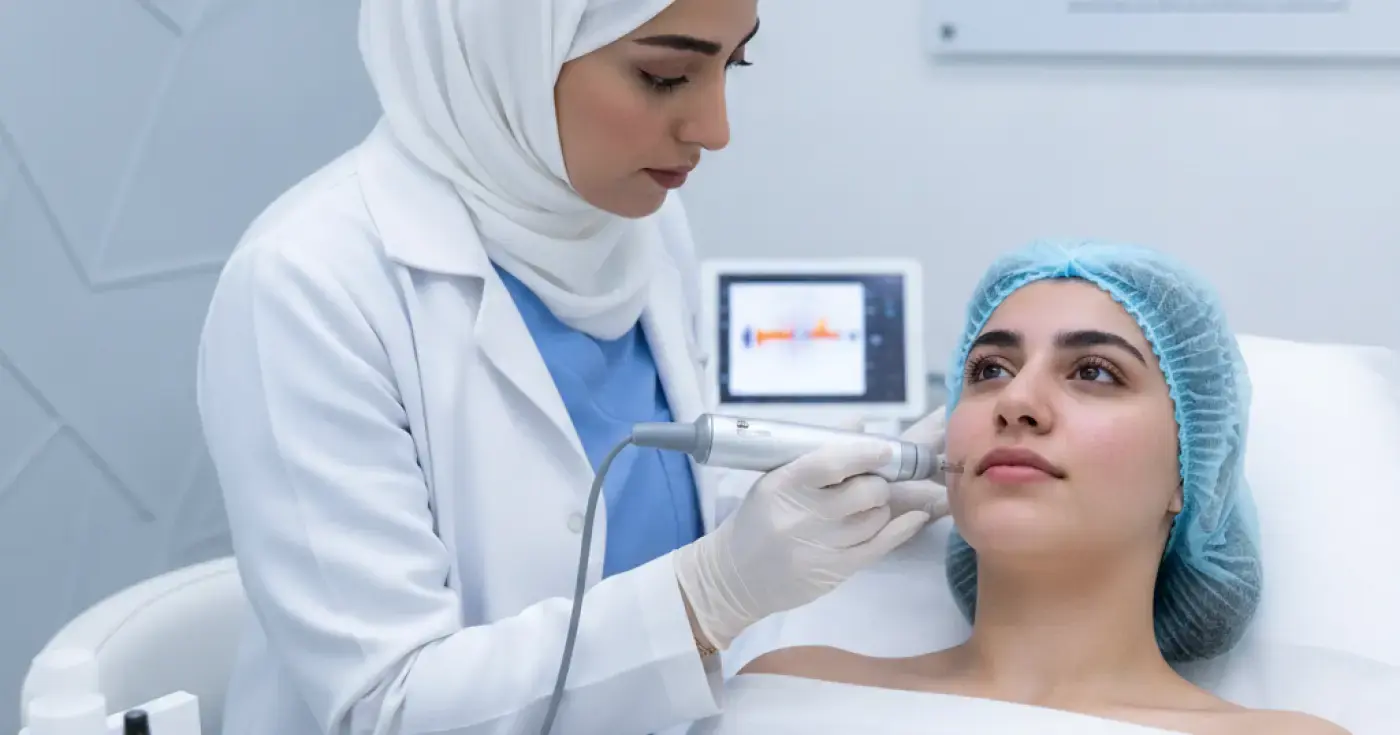
Dermapen is a medical-grade, hand-held microneedling device shaped like a pen. Its tip contains a sterile cartridge of micro-needles that penetrate the skin vertically at adjustable speeds and depths. As the device glides across the skin, it creates hundreds of controlled micro-injuries in the epidermis and dermis.
These micro-channels do not cause actual tissue damage; instead, they trigger a highly organized, natural wound-healing cascade consisting of three main physiological phases:
Furthermore, these micro-channels significantly enhance transdermal drug delivery. When topical therapeutic serums (such as hyaluronic acid, vitamins, or Platelet-Rich Plasma) are applied during skin rejuvenation sessions, their absorption rate increases by up to 80% compared to simple topical application.
Dermapen microneedling offers versatile therapeutic and cosmetic benefits suitable for various age groups and skin types:
Dermapen is considered a gold-standard option for acne scar treatment, particularly atrophic (depressed) scars. The micro-needles break down stubborn fibrous scar tissue and stimulate new collagen production to elevate the depressed areas, gradually smoothing out the skin's surface.
As we age, natural collagen and elastin production declines, leading to fine lines around the eyes, mouth, and forehead. Dermapen stimulates the synthesis of these essential structural proteins, restoring skin volume and naturally softening the appearance of wrinkles.
Enlarged pores often result from a loss of skin elasticity around the pore openings. By boosting collagen production, Dermapen tightens the surrounding skin, visibly reducing pore size and refining rough skin texture.
Microneedling helps break up superficial melanin clusters responsible for dark spots, sun damage, and post-inflammatory hyperpigmentation. As the skin undergoes rapid cellular turnover post-treatment, a brighter and more even complexion is revealed.
Patients often ask about the difference between a professional Dermapen and a traditional Dermaroller. The following table highlights the key clinical and practical differences:
| Feature | Dermapen (Professional) | Dermaroller (Manual) |
|---|---|---|
| Needle Entry Angle | Strictly vertical (90 degrees), minimizing epidermal tearing and pain | Slanted/curved entry, which can cause micro-tears and scratches |
| Depth Adjustment | Highly adjustable (0.25 mm to 2.5 mm) to suit different facial areas | Fixed needle depth, requiring multiple rollers for different areas |
| Hard-to-Reach Areas | Excellent precision around the nose, eyes, and upper lip | Difficult and imprecise to maneuver on curved facial contours |
| Pain & Recovery | Minimal to moderate discomfort; rapid healing with minimal downtime | More painful; higher risk of superficial bleeding and longer recovery |
| Safety & Hygiene | Disposable sterile needle tips; performed in a sterile clinical setting | Reusable rollers; high risk of contamination if not sterilized properly |
To ensure safety and optimal results, the procedure must be performed by a qualified dermatologist. The typical session involves the following steps:
The dermatologist evaluates the patient's skin, identifies target areas, and rules out any contraindications. The face is then thoroughly cleansed to remove makeup, oils, and impurities.
A medical-grade topical numbing cream is applied to the face for 30 to 45 minutes to ensure maximum patient comfort during the procedure.
After removing the numbing cream and disinfecting the skin, the dermatologist glides the Dermapen systematically across the face. The needle depth and speed are customized dynamically based on the target area (e.g., shallower depths around the eyes and deeper settings for cheek scars). A specialized serum, such as hyaluronic acid, is applied simultaneously to maximize absorption.
Proper post-Dermapen skin care is crucial for optimal healing and to prevent complications. Patients should strictly adhere to the following guidelines:
Dermapen is highly safe when performed in a sterile clinical environment. Expected, temporary side effects include:
Severe complications, such as bacterial infections, post-inflammatory hyperpigmentation, or scarring, are extremely rare and typically occur due to poor sterilization, incorrect needle depth, or inadequate sun protection post-procedure.
Dermapen should not be performed if the patient has any of the following conditions:
Dermapen microneedling is a powerful, safe, and natural way to rejuvenate the skin and address common cosmetic concerns. To achieve the best clinical outcomes and ensure your safety, LahaLak Medical Platform highly recommends consulting a board-certified dermatologist who can customize the treatment depth and post-care protocol specifically for your skin type.
Clear, direct answers
Advertisement
Continue exploring

Discover facial mesotherapy: how it works, key ingredients, skin benefits, side effects, and essential pre- and post-treatment medical advice.
Read article
A complete medical guide to facial mesotherapy for skin radiance and even tone. Learn about ingredients, benefits, side effects, and recovery.
Read article
Learn how mesotherapy helps reduce the appearance of enlarged pores, its mechanism of action, key ingredients, and comparison with other treatments.
Read articleExplore the topic