
Lahalak Medical PlatformDifferentiate Care
Learn about key coagulation and bleeding tests like PT, INR, and aPTT. Understand their clinical significance, preparation, and results.
Advertisement
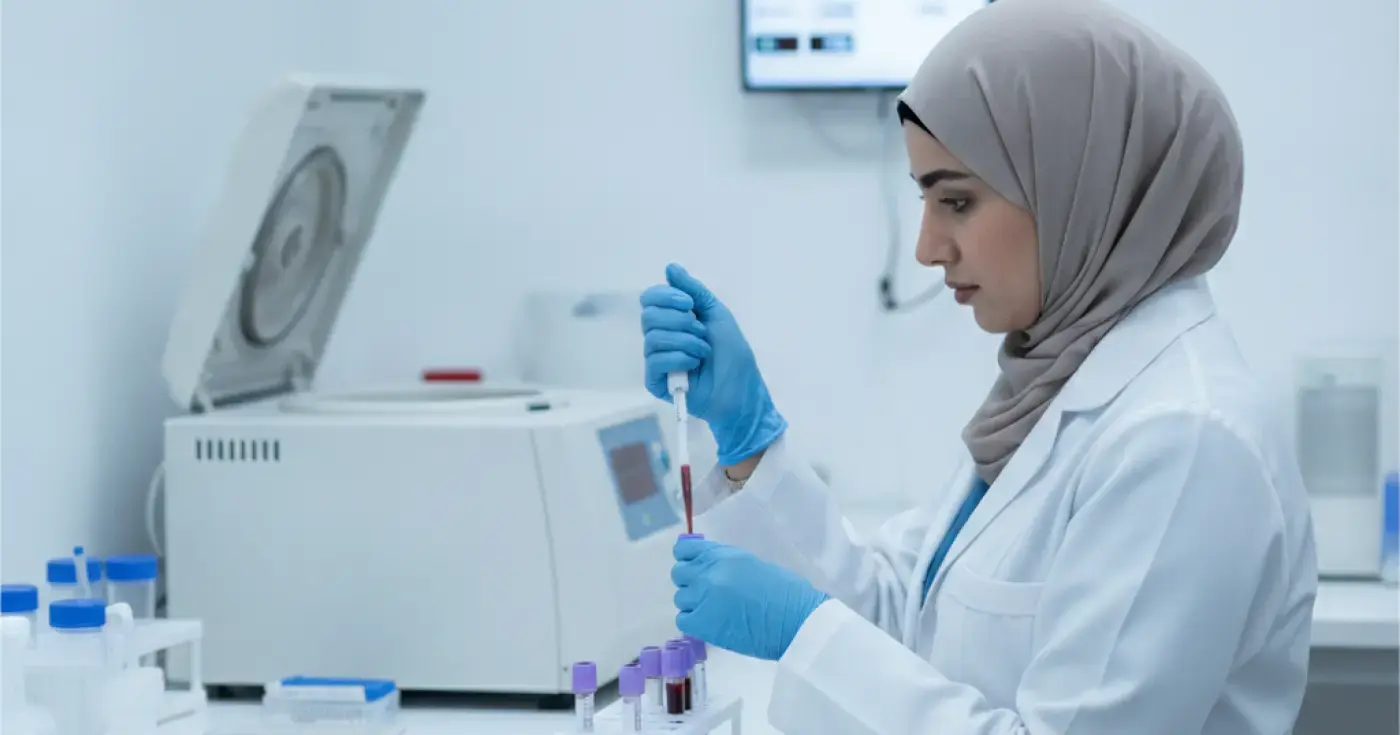
Blood coagulation is a highly sophisticated physiological process designed to maintain vascular integrity. When an injury occurs to a blood vessel, the body initiates a cascade of events to form a stable clot, preventing excessive blood loss while ensuring that blood remains fluid within the rest of the circulatory system. This delicate balance relies on the intricate interaction between blood vessel walls, platelets, and specialized proteins known as clotting factors, which are primarily synthesized by the liver.
Any disruption in this balance can lead to severe clinical consequences: either an increased susceptibility to bleeding or an abnormal tendency to form life-threatening blood clots (thrombosis). Consequently, performing coagulation and bleeding tests is a fundamental diagnostic step to evaluate the efficiency of the hemostatic system and identify underlying disorders.
Coagulation profiles are ordered in various clinical scenarios, ranging from routine screenings to emergency evaluations. Key indications include:
Several laboratory assays are utilized to evaluate different pathways of the coagulation cascade. Below are the most common tests:
The Prothrombin Time (PT) test measures the extrinsic and common pathways of coagulation. Because laboratory reagents vary globally, the International Normalized Ratio (INR) was established as a standardized way to report PT results. It is primarily used to monitor patients on oral anticoagulant therapy like Warfarin.
The Activated Partial Thromboplastin Time (aPTT) evaluates the intrinsic and common pathways of coagulation. It is widely used to monitor patients receiving unfractionated Heparin therapy in hospital settings and to screen for hereditary bleeding disorders such as Hemophilia.
Platelets are cellular fragments essential for primary hemostasis. A Platelet Count is typically performed as part of a Complete Blood Count (CBC) to detect thrombocytopenia (low platelets, which increases bleeding risk) or thrombocytosis (high platelets, which may increase clotting risk).
Fibrinogen (Factor I) is a soluble plasma glycoprotein synthesized by the liver that converts into fibrin to form the structural mesh of a blood clot. This test measures fibrinogen levels and is ordered to evaluate bleeding disorders or suspected Disseminated Intravascular Coagulation (DIC).
This assay measures D-dimer, a fibrin degradation product that rises when clots are actively being broken down in the body. It is highly valued as an exclusion tool; a negative result highly rules out active thrombosis, such as DVT or PE, while a positive result requires further diagnostic imaging.
The following table summarizes the primary coagulation tests, what they measure, and their common clinical indications:
| Test Name | What It Measures | Primary Clinical Indications | Associated Clinical Conditions |
|---|---|---|---|
| PT / INR | Extrinsic pathway | Monitoring Warfarin, liver function assessment | Vitamin K deficiency, liver disease, bleeding risk |
| aPTT | Intrinsic pathway | Monitoring Heparin, screening for Hemophilia | Hemophilia A/B, Lupus Anticoagulant |
| Platelet Count | Platelet quantity | Evaluating bruising, petechiae, bone marrow disorders | Immune Thrombocytopenia (ITP), bone marrow suppression |
| Fibrinogen | Fibrinogen concentration | Assessing severe bleeding, DIC evaluation | Severe liver disease, acute phase inflammatory response |
| D-Dimer | Fibrin degradation products | Ruling out acute venous thromboembolism | Deep Vein Thrombosis (DVT), Pulmonary Embolism (PE) |
To ensure accurate and reliable test results, patients should follow these essential preparation guidelines:
Interpreting coagulation test results is a complex clinical task that must be performed by a qualified healthcare professional who correlates laboratory data with your medical history. Generally:
An elevated PT or aPTT (meaning it takes longer for blood to clot) may indicate a deficiency in clotting factors, liver dysfunction, Vitamin K deficiency, or the therapeutic effect of blood thinners. Conversely, decreased clotting times (which are less common) might suggest a hypercoagulable state, requiring comprehensive clinical evaluation and consulting a hematologist.
The healthcare system in Saudi Arabia maintains rigorous standards for laboratory medicine and patient safety. Advanced automated assays are widely available across Saudi hospitals to deliver rapid and highly precise coagulation profiles, which are crucial for emergency care and surgical planning.
At LahaLak, we strongly advise patients never to adjust their blood thinner dosages independently based on laboratory reports. Any dosage modification must be supervised directly by your physician to prevent severe complications like major bleeding or sudden thrombotic events.
Coagulation and bleeding tests are indispensable tools in modern preventive and therapeutic medicine. Whether you are preparing for surgery or managing a chronic cardiovascular condition with anticoagulants, understanding these tests and adhering to preparation guidelines ensures your safety. Regular follow-ups and clear communication with your healthcare provider remain the cornerstone of effective health management.
Clear, direct answers
Advertisement
Continue exploring

Learn about essential cardiac risk factor tests, including lipid panels and hs-CRP, to assess and manage your cardiovascular health.
Read article
Learn about the high-sensitivity C-reactive protein (hs-CRP) test, its role in predicting heart disease risk, and how to interpret your results.
Read article
Learn about the homocysteine blood test, its role in cardiovascular risk assessment, causes of high levels, and medical guidelines for management.
Read articleExplore the topic