Dengue Virus Antibody Test | Lahalak Platform

A rapid test to detect Dengue virus antibodies, helping diagnose current or past infections and ensuring you receive the necessary medical care immediately.

Scientific name: Dengue Virus IgG/IgM Antibody Test

A rapid qualitative immunoassay (often using immunochromatographic methods) aimed at qualitatively detecting the presence or absence of IgM and IgG antibodies against the Dengue virus in a serum, plasma, or whole blood sample. It is performed on a test strip (Rapid Test) that provides visible results within 15-30 minutes. It aims to differentiate b...
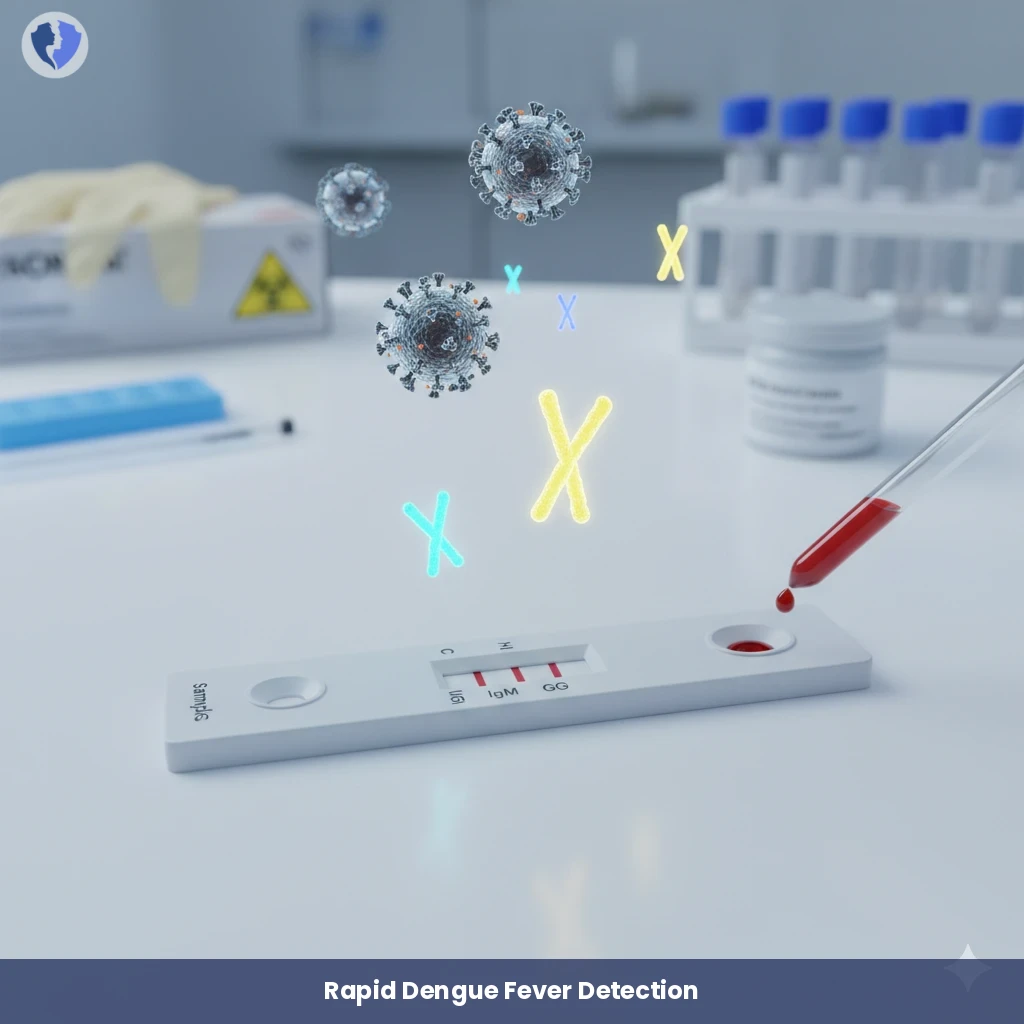

Dengue Virus IgG/IgM Antibody Test - Rapid Dengue Fever Screening
Service type Laboratory test (Blood)
Duration 10-15 minutes
Fasting Fasting is not required

Included Services

  • Dengue Virus (IgG/IgM Combo) Qualitative Test
  • Consultation with an infectious disease specialist or the treating physician for initial result interpretation.
  • Personal support services from Lahalak

Medical Service Information

Purpose Test

  • Initial rapid screening and early detection: For detecting Dengue virus infection in endemic areas or during disease outbreaks.
  • Distinguishing between acute and previous infection: Helps differentiate between acute (active) infection and previous infection based on antibody patterns (IgM vs. IgG).
  • Primary clinical management: Provides a rapid result to guide initial clinical management, especially in cases showing symptoms of Dengue fever (fever, muscle pain, rash).
  • Epidemiological surveys: Used in rapid epidemiological surveys to assess the spread of infection in a community.

Recommended groups

  • Individuals with acute fever symptoms: In areas known for Dengue virus spread (Asia, Latin America, Africa, etc.).
  • Travelers returning from endemic areas: With fever symptoms appearing within two weeks of their return.
  • Patients during Dengue outbreaks: Local outbreaks or epidemics.
  • Patients suspected of having Dengue Hemorrhagic Fever (DHF): Or Dengue Shock Syndrome (DSS).

Symptoms indicative

  • Sudden high fever: Which may reach up to 40°C and lasts from 2 to 7 days.
  • Severe pain: Behind the eyes, in the muscles, and joints.
  • Rash.
  • Mild bleeding: Such as gum bleeding, nosebleeds, and red spots under the skin.
  • Nausea and vomiting.

Frequently Asked Questions (FAQs)

  • IgM antibodies: They begin to appear 3-5 days after the onset of symptoms, peak at around two weeks, then start to decline and disappear after 2-3 months.
  • IgG antibodies: They appear after IgM and remain in the blood for many years, possibly for life.
  • IgM positive, IgG negative: Indicates a possible acute primary infection.
  • IgM positive, IgG positive: May indicate an acute infection (primary or secondary) or a later stage of primary infection.
  • IgM negative, IgG positive: Indicates a past dengue infection.
  • Both negative: No evidence of current or past infection (or the test may have been too early).

Normal Levels

  • The negative (normal) result means there are no detectable IgG and IgM antibodies against the dengue virus in the blood sample taken, indicating no current or past infection (at the time of testing).

Conditions & Notices

  • Fasting is not required.
  • The sample can be taken from venous blood or through a fingertip prick.
  • The timing of the sample is important: To obtain the best result, the sample should be taken after the fifth day of fever onset.
  • The doctor should be informed of the recent travel history to endemic areas.
  • Due to its nature as a rapid test, the result should always be correlated with clinical symptoms and the patient's history. Confirmatory tests are often required.

Medical services you might also like