Service Details
Comprehensive Family Genetic Diagnosis - Whole Exome Sequencing (WES), Trio
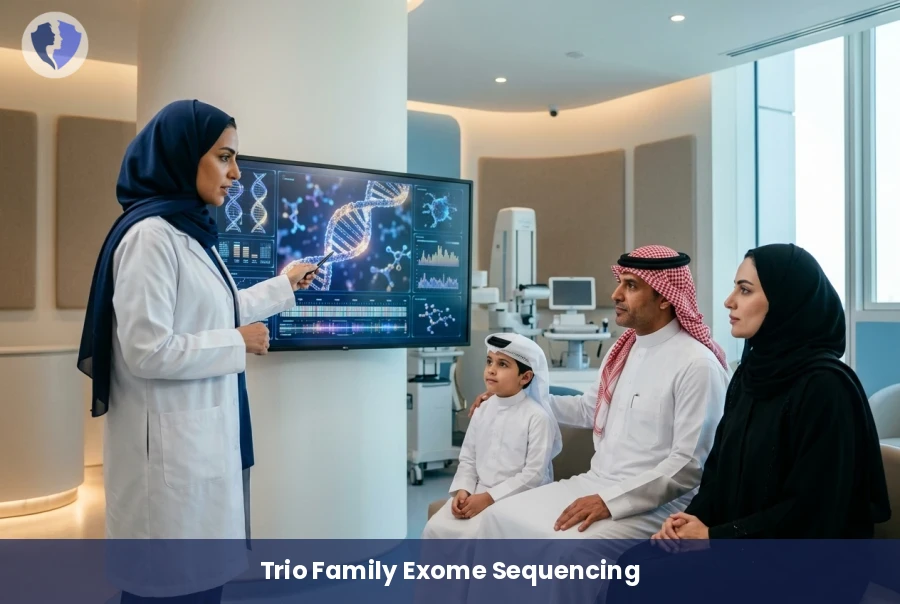
Advanced first-order genome sequencing (NGS) is applied to the nuclear family consisting of the patient (affected child) and their parents. Whole exomes of all three are sequenced and compared simultaneously. This approach allows for the precise and immediate identification of de novo mutations, recessive mutations (inheritance of a defective copy from each parent), and dominant mutations (inheritance of a defective copy from one parent). It significantly reduces the time and effort required to filter and interpret thousands of genetic variants.