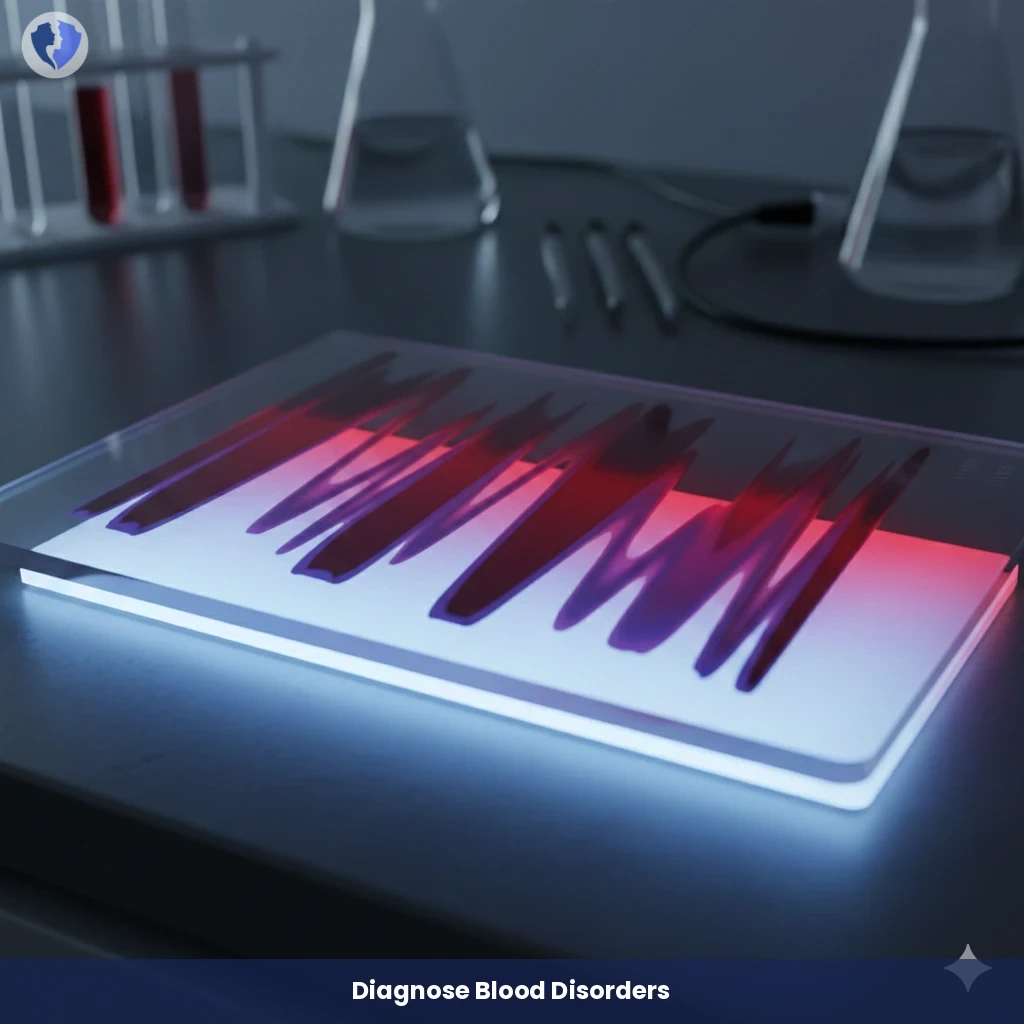
Hemoglobin Electrophoresis Test
A highly specialized hematological laboratory procedure designed to systematically separate and identify the varied structurally distinct types of hemoglobin residing within erythrocytes. The methodology capitalizes on applying a controlled electrical field across a specialized conductive medium (typically a cellulose acetate gel or a specialized silica matrix) to separate hemoglobin variants based on their unique electrical charges and differing molecular masses. This sophisticated separation facilitates the precise quantification of both normal, physiological hemoglobins (such as Hb A, Hb A2, and Hb F) and abnormal, pathological variants (including Hb S indicative of Sickle Cell Anemia, as well as Hb C, Hb E, or other distinct variants intimately associated with Thalassemia syndromes). Consequently, this assay serves as the fundamental, definitive diagnostic cornerstone for evaluating and classifying inherited hemoglobinopathies and corresponding genetic blood disorders.