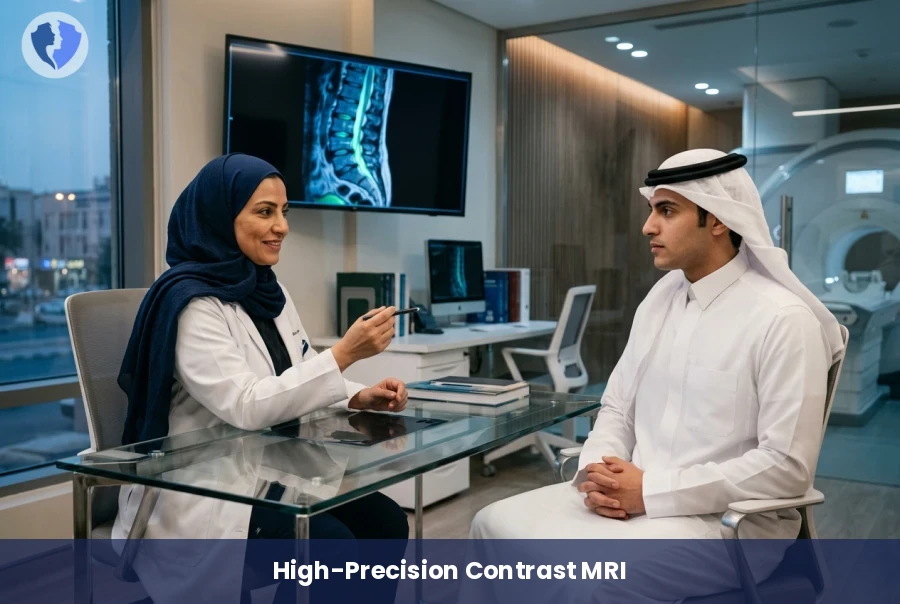
MRI with Contrast - MRI - Single Body Part (With Contrast)
Scan Definition: Contrast-Enhanced Single-Region Functional and Anatomical Magnetic Resonance Imaging. Contrast Agent Employed: Gadolinium-based Contrast Agents (GBCA). Molecular Type: Typically macrocyclic structures are preferred due to their superior safety profile and substantially lower associated risk of triggering nephrogenic systemic fibrosis. Standard Dosage: Ranging between 0.1 and 0.2 mmol/kg. Administration Route: Intravenous injection, precisely controlled via an automated power injector. Scientific Principle: The Gadolinium-based contrast medium operates by actively shortening the T1 magnetic relaxation time of locally adjacent hydrogen protons. This phenomenon selectively amplifies the T1 signal intensity directly in regions experiencing pathological contrast accumulation (characterizing areas exhibiting increased vascular permeability or distinct disruption of the blood-brain barrier). Primary Contrast-Enhanced Imaging Sequences: T1-weighted sequences augmented with fat suppression (acquired across multiple post-injection temporal phases), T1 perfusion mapping (for critical evaluation of localized blood flow and capillary hemodynamics), and dedicated MR Angiography (for the high-resolution mapping of the vascular tree). Clinical Indications for Use: Essential for the definitive tissue characterization of suspicious, indeterminate lesions initially detected on unenhanced baseline scans, comprehensive assessment of a lesion's internal vascularity, sensitive detection of minute cerebral or osseous metastases, accurate clinical diagnosis of neuro-inflammatory states like meningitis and encephalitis, and the rigorous pre-surgical or post-treatment evaluation of both primary and secondary neoplastic tumors.